
July 4, 2026
Wellness Tips
TL;DR: Lipedema vs lymphedema is one of the most common mix-ups in swollen-leg health, and the difference matters. Lipedema is a disorder of fat tissue, lymphedema is a disorder of fluid, and the care that helps one is not the care that helps the other.
Swollen legs get blamed on a lot of things. Water weight, too much salt, a skipped week at the gym. When the swelling sticks around no matter what you change, though, two conditions are often behind it, and they get confused constantly: lipedema and lymphedema.
Lipedema vs Lymphedema: The Core Difference
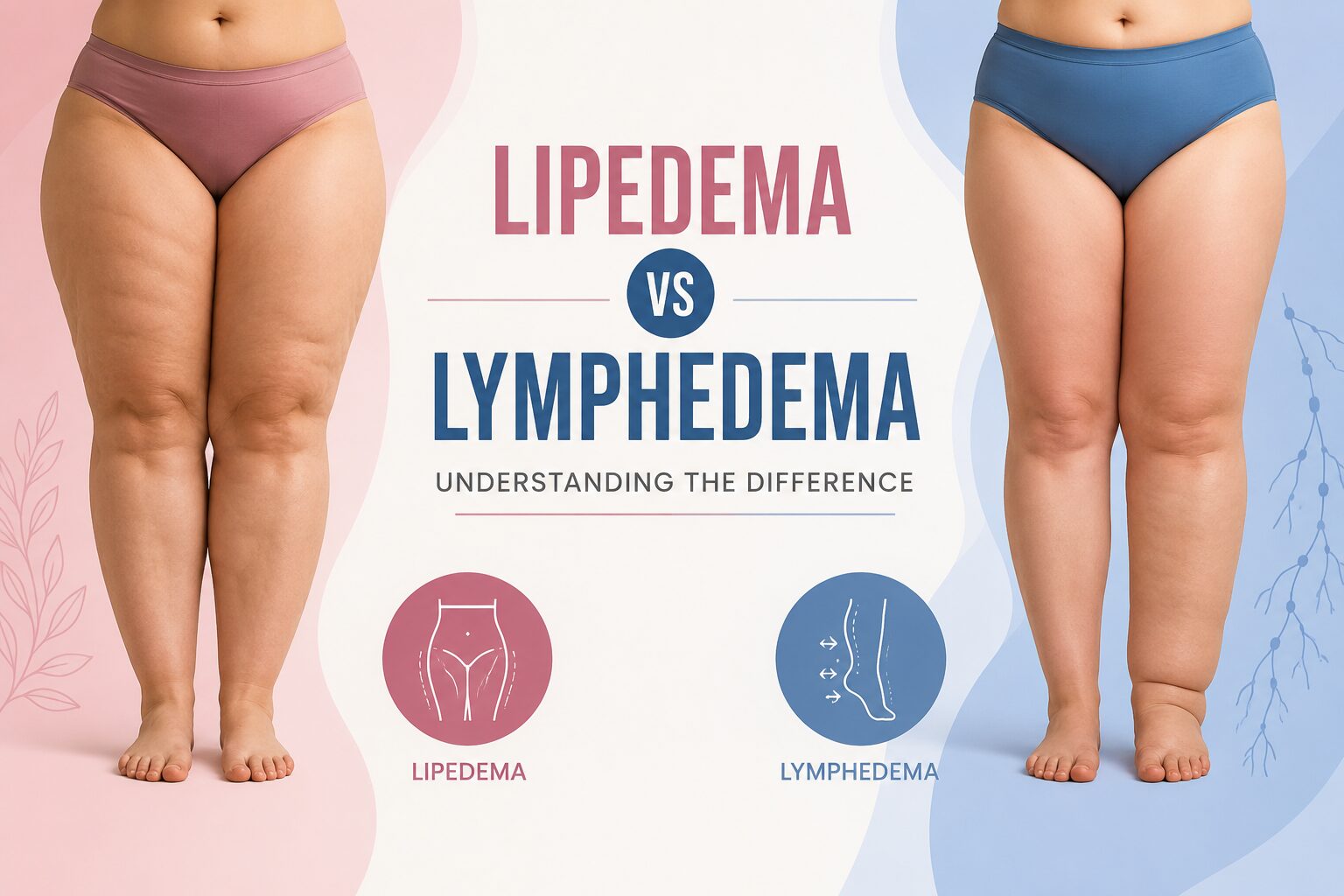
The short version is worth knowing before anything else. Lipedema is a disorder of fat tissue. Lymphedema is a disorder of fluid. They can look similar, they sometimes occur together, and telling them apart matters because what helps one does not necessarily help the other.
What Lipedema Is
Lipedema is a chronic condition where fat builds up abnormally, usually in the legs, hips, and buttocks, and sometimes the arms. The pattern is the giveaway. It shows up symmetrically on both sides of the body, and it tends to spare the feet and hands, which can leave a visible cuff at the ankle where the affected tissue stops. The fat is often tender or painful to the touch, bruises easily, and does not respond to diet or exercise the way ordinary weight does. It affects women almost exclusively, and it often appears or worsens during hormonal shifts like puberty, pregnancy, or menopause. The Lipedema Foundation notes that the condition is estimated to affect a large share of women yet is rarely diagnosed in the United States, mostly because awareness among general physicians is still low.
What Lymphedema Is
Lymphedema is a different problem with a different cause. It happens when the lymphatic system, the network that drains excess fluid from your tissues, is damaged or blocked, so fluid collects instead of moving on. It can be primary, meaning someone is born with a lymphatic system that does not work well, or secondary, meaning it develops after something damages the system. Secondary lymphedema is far more common and often traces back to surgery, radiation, infection, or cancer treatment. Someone who has had lymph nodes removed during breast cancer surgery, for example, may develop it in the arm on that side.
How to Tell Them Apart
The symptoms overlap enough to fool even experienced clinicians, but a few tells usually separate them. Lipedema is symmetrical and spares the feet. Lymphedema is often one-sided and does involve the feet and hands. Lipedema is painful and bruises easily. Lymphedema tends to feel tight and heavy more than sore. One simple check clinicians use is the Stemmer sign, which involves trying to pinch the skin at the base of the toes. It is usually negative in lipedema and positive in lymphedema. These are clues, not a diagnosis.
| What to notice | Lipedema | Lymphedema |
|---|---|---|
| Symmetry | Both sides evenly | Often one-sided |
| Feet and hands | Usually spared | Often involved |
| How it feels | Tender, bruises easily | Tight and heavy |
| Underlying cause | Fat disorder, hormone-linked | Lymphatic damage or blockage |
| Stemmer sign | Negative | Positive |
When You Have Both
It is also possible to have both. When long-standing lipedema puts enough strain on the lymphatic system, fluid drainage can start to fail on top of the existing fat disorder, a combination known as lipo-lymphedema. That overlap is one more reason self-diagnosis is a bad idea. If ongoing swelling and water retention have you guessing, that is a signal to get a professional read rather than piece it together yourself.
Getting a Real Lipedema or Lymphedema Diagnosis
Here is the part that matters most. Only a qualified clinician can diagnose either condition. Lipedema in particular is a clinical diagnosis, which means there is no blood test or scan that confirms it. It is identified through a physical exam and a careful history by a doctor who knows what to look for, usually a vascular or lymphatic specialist. If your legs have been swollen, heavy, tender, or bruising easily for weeks, and the usual explanations do not fit, that is a reason to get evaluated rather than guess. Early answers give you more options.
How to Prepare for Your Appointment
It helps to walk into that appointment prepared. Before you go, it is worth noting:
- When the swelling started
- Whether it sits on both sides evenly or favors one
- Whether the fat is tender or bruises easily
- Whether anything in your family history lines up
Those details give a specialist a head start.
What Clinical Care Involves
For clinical management, the standard of care for both conditions leans on the same core tools, adjusted to the person: manual lymphatic drainage performed by a trained therapist, compression, skin care, and movement, often grouped together as complete decongestive therapy. Your specialist is the person to build that plan.
Where Gentle Wellness Fits
Where does a wellness spa fit into any of this? Not in the diagnosis, and not in the treatment. Empower Wellness Spa is not a medical clinic, and it does not diagnose or treat lipedema or lymphedema. What a calm, supportive environment can offer is gentle, non-invasive bodywork that some clients choose to lean on alongside the medical care their doctor provides, never in place of it. Movement and unhurried bodywork feel good to a lot of people who live with chronic swelling, and comfort has real value.
Final Thoughts
If you take one thing from all this, let it be the difference between fat and fluid, and the habit of getting a real answer instead of a guessed one. Lipedema and lymphedema are both manageable, and the people who do best are usually the ones who got named correctly and early.
Feel Supported at Empower Wellness Spa
If you are in Encino or the wider San Fernando Valley and already working with a specialist, Empower Wellness Spa offers a calm, low-pressure space to add gentle comfort to your routine. Our non-invasive bodywork is a supportive add-on, never a substitute for your medical plan. Call or book a visit and let your doctor lead the care while we help you feel a little lighter along the way.
Frequently Asked Questions
Yes. When lipedema has been present a long time, it can strain the lymphatic system until fluid drainage begins to fail on top of the fat disorder. Clinicians call that combination lipo-lymphedema. It is one of the main reasons self-diagnosis is unreliable, since the picture can shift over time. A vascular or lymphatic specialist can tell you whether one or both are in play and adjust your plan accordingly.
Lipedema is diagnosed clinically, which means there is no single blood test or scan that confirms it. A specialist relies on a physical exam and a detailed history, looking at symmetry, whether the feet are spared, tenderness, and bruising. For lymphedema, the Stemmer sign and imaging of the lymphatic system can help. The takeaway is simple: an accurate call comes from a qualified clinician, not an online checklist.
Not usually. Lipedema fat tends not to respond to diet and exercise the way ordinary weight does, which is part of what frustrates so many women before they get a name for it. General health still benefits from movement and balanced eating, but they are not a fix for the condition itself. A specialist can explain the options that are actually relevant to lipedema.
Start with a vascular or lymphatic specialist, or a physician experienced with lipedema and lymphedema. Many general practitioners are not trained to recognize lipedema, so if you feel dismissed, it is reasonable to seek someone who focuses on these conditions. Bringing notes on when your swelling started and how it behaves will help the appointment move faster.
No. Cancer surgery and radiation are common causes of secondary lymphedema, but they are not the only ones. Infection, other surgeries, and injury can damage the lymphatic system too, and some people have primary lymphedema they are born with. The cause matters for care, which is another reason a professional evaluation is worth it.
Encino spa, rebounder therapy, red light therapy, wellness recovery