
July 28, 2026
Wellness Tips
TL;DR: Foot zoning and reflexology are related foot-based practices, not the same thing. Reflexology uses targeted pressure on specific points, while foot zoning works the whole foot in a set sequence. Both rest on a traditional body-map idea, and both are best understood as deeply relaxing wellness rather than medical treatment. Here’s what this piece covers:
If you have ever gone looking for a foot-based wellness treatment, you have probably seen the two names used as if they mean the same thing. Foot zoning and reflexology get lumped together constantly, and it is easy to see why. Both work entirely on the feet, both are built on the old idea that different areas of the foot connect to the rest of the body, and both tend to feel wonderful. They are cousins, not twins, and the differences are worth knowing before you book.
What They Share
Start with what they share, because that is the bigger part of the story. Both practices come out of a tradition sometimes called foot zone therapy, popularized in the United States by Dr. William Fitzgerald in the early 1900s, with much older roots in ancient healing customs. [VERIFY history detail before publish.] The shared premise is that the foot works like a map of the body, and that working specific areas of the foot can prompt a sense of balance and relaxation elsewhere. It is a traditional framework, not a proven medical mechanism, and that distinction matters when you are deciding what to expect.
The Honest Evidence
Here is the honest version of the evidence. Research on reflexology mostly points to what people report most reliably, which is relaxation, lower stress, and a general sense of wellbeing. The bigger claims you will see online, the ones about flushing organs or healing specific conditions, are not well supported by strong studies. That does not make either practice pointless. It just means the realistic promise is a calm nervous system and a pleasant reset, not a cure for anything.
How Reflexology Works
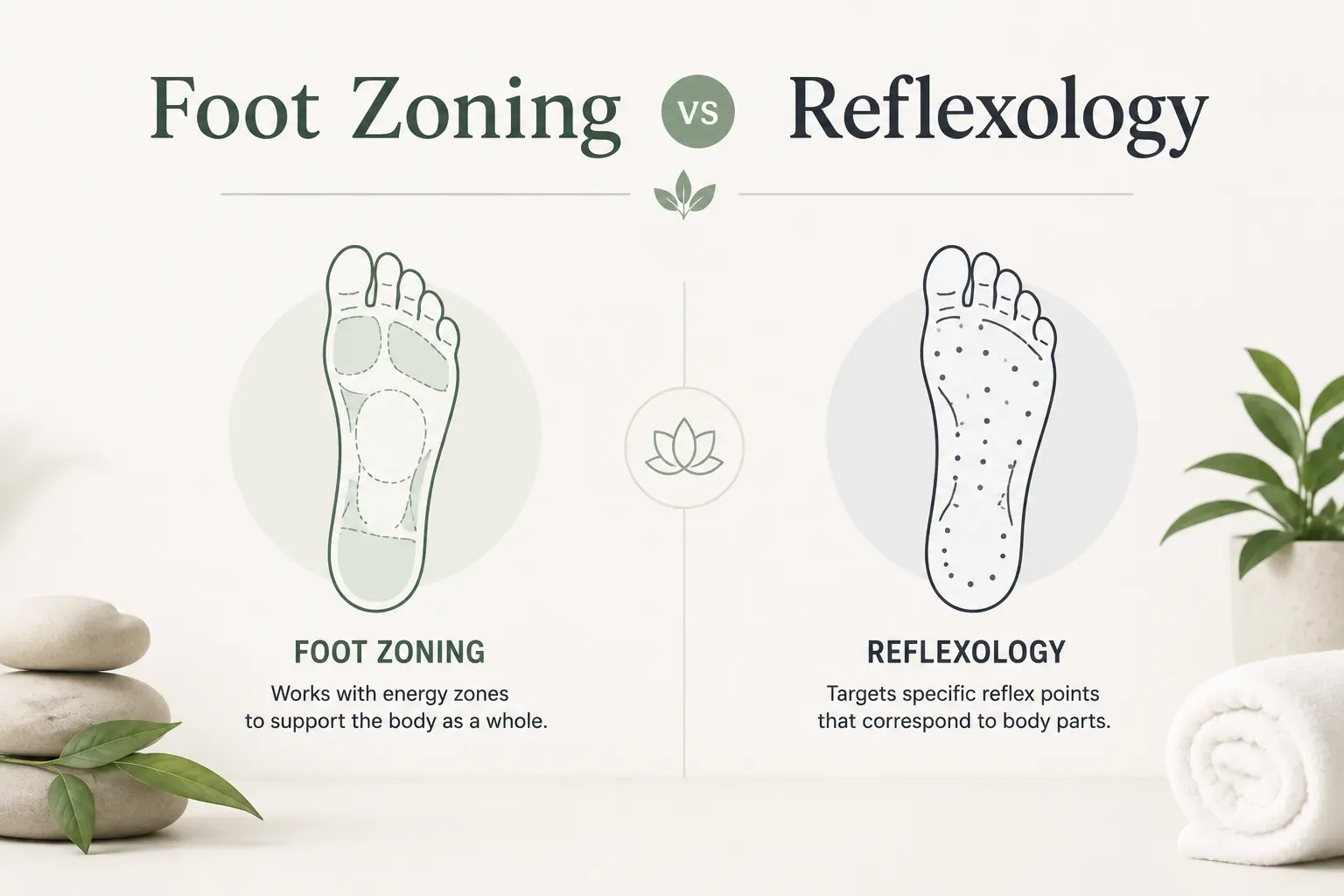
Reflexology tends to be targeted. A reflexologist applies focused pressure to specific points that are believed to correspond to particular organs or systems, and sessions often zero in on the areas tied to whatever a client wants to ease, like tension or trouble winding down. It can also involve points on the hands and ears, not only the feet.
How Foot Zoning Works
Foot zoning takes a wider view. Instead of working a few points, a practitioner moves through the whole foot in a set sequence, following a map of zones meant to touch every part of the body in one session. The framing is holistic, treating the body as one connected system rather than a set of separate symptoms. In practice, that usually means a longer, more methodical session that covers the entire foot every time, regardless of what brought you in.
| Aspect | Reflexology | Foot Zoning |
|---|---|---|
| Technique | Targeted pressure on specific points | Whole foot worked in a set sequence |
| Areas worked | Feet, sometimes hands and ears | Feet and ankles, full map each time |
| Approach | Focus on points tied to a concern | Holistic, whole-body framing |
| Session feel | Can be shorter and targeted | Usually longer and methodical |
| Best for | Focused tension relief | A full, whole-foot reset |
Which One Is Right for You?
So which one is right for you? The labels matter less than the practitioner and what you are after. If you want focused attention on a specific area of tension, a reflexology-style session leans that way. If you want a slower, whole-foot experience that feels like a full reset, foot zoning fits. Both deliver the same core benefit that the science actually backs, which is deep relaxation, so you can pick based on the experience you want rather than any grand health claim.
What These Practices Are Not
One thing worth saying plainly. Foot zoning and reflexology are complementary wellness practices, not medical treatments. They are not a substitute for care from a doctor, and they are not the place to diagnose or treat a health condition. If something feels off in your body, that is a conversation for a clinician. What these practices are genuinely good at is helping you slow down, and there is real value in that.
Final Thoughts
The takeaway is simple. Foot zoning and reflexology grew from the same root and share a lot, but foot zoning works the whole foot in sequence while reflexology targets specific points. Neither is magic. Both are a good excuse to sit still, breathe, and let someone take care of your feet for an hour.
Try Foot Zoning at Empower Wellness Spa
Curious to try it? Empower Wellness Spa offers foot zoning in Encino as a calming, whole-foot reset. Book a session and give yourself an hour to unwind in the San Fernando Valley.
Frequently Asked Questions
It depends, and that is a question for your practitioner and your doctor rather than a blog. Certain conditions, including pregnancy, circulatory issues, and active infections, call for medical clearance before any hands-on foot work. Tell the practitioner what is going on before you book so they can advise you or ask you to check with your physician first.
Most foot zoning sessions run about thirty to sixty minutes, and reflexology sessions vary depending on whether the practitioner is targeting a specific area or working more broadly. Foot zoning tends to be on the longer side because it covers the whole foot in sequence rather than focusing on a few points.
Not at all. The relaxation most people feel comes from an hour of calm, steady pressure and quiet, and that works regardless of what you make of the traditional theory behind it. Plenty of clients come in skeptical of the philosophy and still leave feeling noticeably calmer.
Usually not. Both are typically considered wellness or relaxation services rather than medical care, so they are generally paid out of pocket. If insurance coverage matters to you, check directly with your provider, but plan on treating these as self-care rather than a reimbursable treatment.
A standard foot massage is freeform and aimed at easing muscle tension wherever it feels good. Foot zoning follows a specific, repeatable sequence across the whole foot based on a zone map. It can feel similar and just as relaxing, but the structure and intent behind the movements are different.
Encino spa, rebounder therapy, red light therapy, wellness recovery